Key Takeaways
- A correct spec isn’t “10 micron.” It’s micron + flow + ΔP + contaminant + chemistry + temperature + geometry + connection + media grade.
- The most common failure isn’t “bad filter.” It’s wrong fit: OD/ID mismatch, incorrect end connection, or seal compression problems.
- Micron rating controls retention, but service life is controlled by face velocity, pore structure, and dirt-holding capacity.
- Media grade (resin grade + sintering recipe) affects pore distribution, strength, and consistency—it’s not a fancy label.
- If you want repeat orders to behave the same, specify tolerances and validation requirements, not just nominal dimensions.
Introduction
Here’s the direct answer: to specify a sintered plastic filter cartridge correctly, you must define five things: filtration target (micron/efficiency), operating conditions (flow, ΔP, temperature, chemistry), geometry (length, OD/ID, wall thickness), connection/sealing (end caps, adapters, O-rings), and media grade (polymer type + pore structure consistency). Get these right and the cartridge will fit, seal, and run for predictable service life. Get one wrong—especially the connection or OD/ID—and you’ll get leaks, bypass, early clogging, or the classic “it worked last time” mystery.
I’m going to walk you through the spec like we’re writing a purchase order that won’t embarrass you later.
- Stop thinking in micron-only terms: explain why retention ≠ run time
- Define operating reality first: flow, ΔP limits, temperature, chemistry, solids load
- Lock the geometry: length, OD/ID, wall thickness, tolerances
- Connections and seals: the #1 cause of bypass and “random leaks”
- Media grade: how polymer grade + sintering controls pore distribution and strength
- Spec sheet template: a copy/paste checklist you can send to suppliers
- Common failure stories: what goes wrong and how to prevent it
- FAQ for AEO / “People Also Ask”
Now—let’s build your spec.
Step 1: Define What the Filter Must Achieve (Not What You Want to Buy)
H2: 1) Filtration target: micron rating + efficiency expectation
Start with the obvious:
- target particle size removal (e.g., protect a nozzle, protect a membrane, meet clarity spec)
- whether you need nominal or absolute-style retention behavior
- whether you need depth loading (longer runs) or surface capture (sharp cutoff)
My opinion: if you can’t define your retention goal, you’re not choosing a filter—you’re ordering a placebo.
H2: 2) The contaminant “personality”
Write down what you’re filtering:
- hard grit (sand, rust, scale)
- soft gels or smear-prone solids
- fibrous particles
- oils/fats/resins that blind surfaces
- precipitates that appear only when temperature changes
This matters because two streams with the same “particle size” can clog totally differently.
Step 2: Lock the Operating Conditions (Because Physics Doesn’t Care About Your PO)
H2: 3) Flow rate (normal + peak)
Specify:
- normal operating flow (e.g., L/min)
- peak flow / startup flow
- whether flow is steady or pulsing
H2: 4) ΔP limits (initial and end-of-run)
This is the part people skip, then complain.
Define:
- max acceptable initial ΔP (clean cartridge)
- max acceptable end-of-run ΔP (when you will change/clean it)
- any alarm/shutdown thresholds in your system
If you don’t define this, you’re basically saying: “Plug whenever you feel like it.”
H2: 5) Temperature range (normal + spikes)
For sintered plastics, temperature isn’t just “can it survive?” It’s:
- will it creep under load?
- will dimensions drift and cause seal issues?
- will pore structure performance shift?
So specify:
- continuous temperature
- short-term peaks
- thermal cycling frequency (if relevant)
H2: 6) Chemistry and cleaning exposure
Include:
- process fluid identity + concentration
- cleaning chemistry (CIP detergents, acids, caustics, oxidizers, solvents)
- exposure time and temperature during cleaning
- sterilization method if applicable (steam, hot water, chemical, etc.)
One blunt truth: lots of filters don’t die in the process fluid. They die in cleaning.
Step 3: Specify Geometry Like a Person Who Hates Leaks
H2: 7) Length (overall and effective)
Cartridge “length” is a mess because people mix:
- overall length
- element length
- sealing length / engagement length
- end cap stack-up length
So specify:
- overall length (mm)
- effective filtration length (if different)
- tolerance (± mm)
H2: 8) OD/ID and wall thickness
This is where bypass ghosts are born.
Specify:
- OD (outer diameter)
- ID (inner diameter)
- wall thickness (or let it be derived from OD/ID)
- straightness / concentricity requirement if critical
- tolerance (± mm)
H3: Why OD/ID matters beyond “fit”
- OD affects surface area and face velocity (service life)
- ID affects pressure drop and mechanical strength
- wall thickness affects strength and dirt-holding capacity
If you’re filtering abrasive streams or running higher ΔP, wall thickness and support strategy become major.
Step 4: Connection & Sealing (The #1 Reason Filters “Fail”)
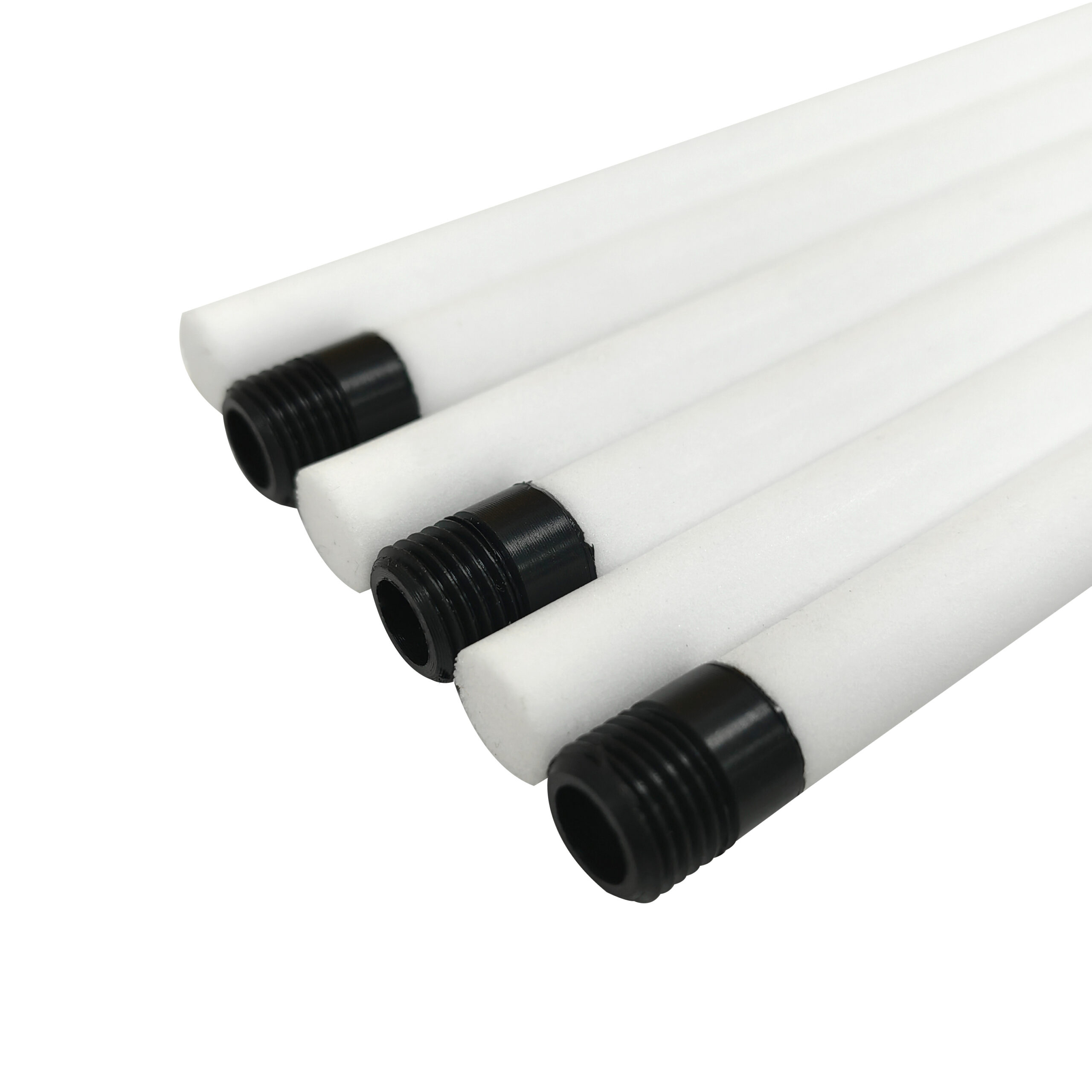
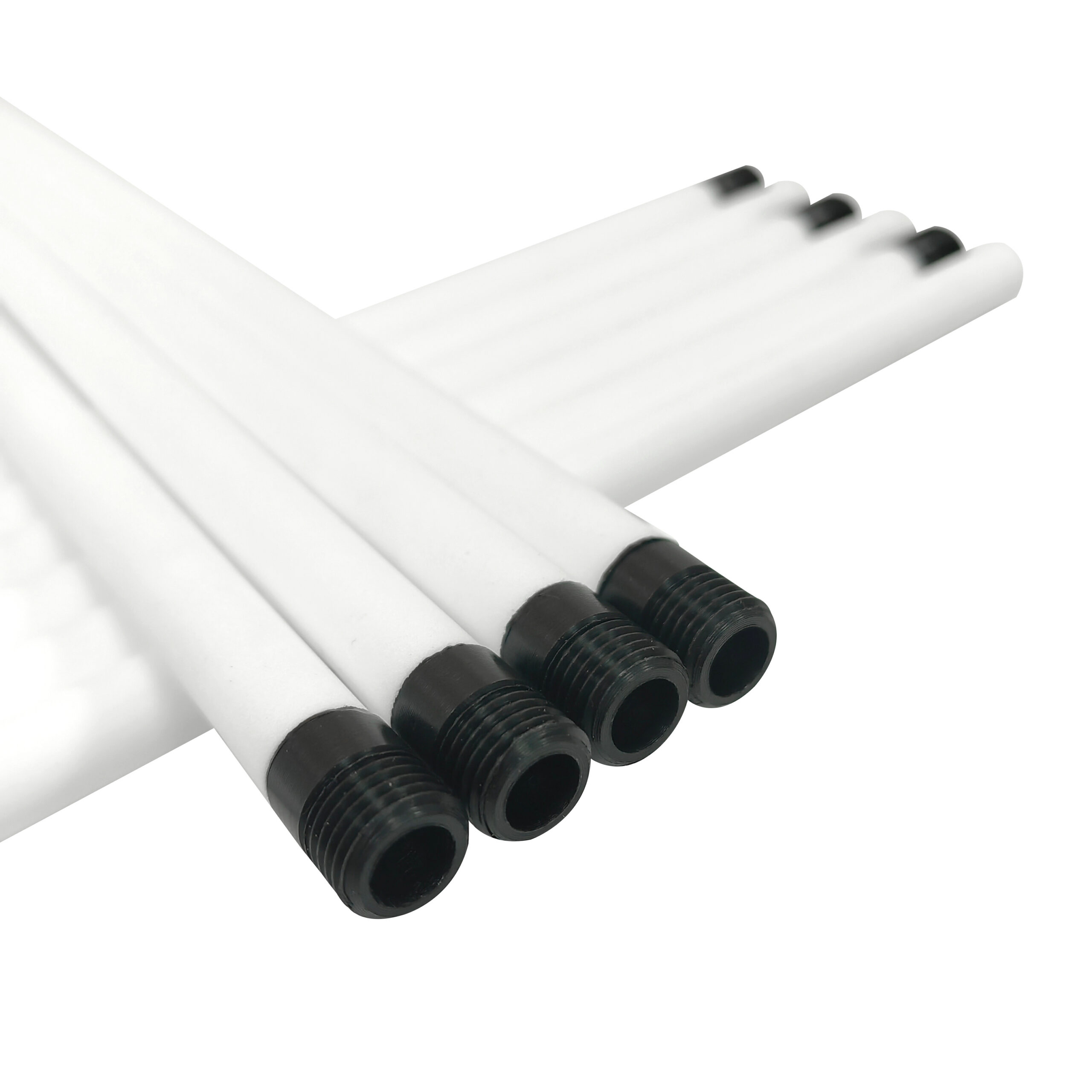
H2: 9) End connection type
Define exactly what interfaces with your housing:
- DOE (double open end)
- SOE (single open end)
- threaded end (spec the standard)
- bayonet / twist-lock
- custom adapters
If you say “standard connection,” you’re about to receive five different definitions of “standard.”
H2: 10) Seal style and material
Specify:
- O-ring size (AS568 / metric)
- gasket style (flat, tapered, knife-edge, etc.)
- seal material (EPDM, Viton/FKM, silicone, PTFE-encapsulated, etc.)
- compression requirement or gland design expectation (if known)
My opinion: most “filter problems” are really seal problems wearing a fake mustache.
H2: 11) Polymer type: PE vs PP vs PTFE vs PA (nylon)
You’re writing a sintered plastic spec, so polymer is foundational:
- PE: tough, good for many water-like streams
- PP: versatile, good for many aqueous chemicals and higher temps than PE in many cases
- PTFE: corrosive chemistry champion, hydrophobic quirks
- PA (nylon): strong, abrasion resistant, moisture absorption considerations
Choose based on chemistry, temperature, and mechanical demands.
Media grade isn’t a marketing sticker. It usually captures:
- resin grade / additives (impact, purity, compliance needs)
- powder size distribution
- sintering temperature/time profile
- resulting pore distribution and mechanical strength consistency
If you care about repeatability, specify:
- target porosity range (if known)
- pore distribution expectations (uniform vs gradient)
- mechanical strength requirements (compression, burst, etc.)
- cleanliness requirements (particle shedding, extractables, odor, etc., as needed)
A Copy/Paste Spec Template (Send This to Suppliers)
H2: “Sintered Plastic Filter Cartridge Specification” Checklist
- Application: (what system, what the filter protects)
- Fluid: (name, concentration, viscosity if relevant)
- Operating temperature: (continuous / peak)
- Flow rate: (normal / peak)
- ΔP limits: (initial max / end-of-run max)
- Contaminant: (type + estimated size + loading profile)
- Filtration target: (micron rating + nominal/absolute expectation)
- Polymer: (PE / PP / PTFE / PA)
- Media grade: (standard / high purity / gradient / custom notes)
- Geometry: length (±), OD (±), ID (±), wall thickness
- Connection: DOE/SOE/thread/bayonet + exact interface details
- Seal: type + size + material
- Cleaning/sterilization exposure: chemistry + temperature + cycles
- Compliance/Docs (if needed): CoA/CoC, lot traceability, test reports
- Packaging: clean packaging, bagging requirements, labeling requirements
If your supplier can’t answer this, they’re not ready for your process.
Common Spec Mistakes (So You Can Avoid the Greatest Hits)
H2: Mistake #1 — “10 micron, 10 inch” with no ΔP or flow
That’s not a spec. That’s a wish.
H2: Mistake #2 — Ignoring OD/ID tolerance
The cartridge fits “most of the time,” and then one batch leaks. That’s tolerance biting you.
H2: Mistake #3 — Wrong seal material
The filter survives. The O-ring turns into a sad noodle. Guess who gets blamed? The filter.
H2: Mistake #4 — Forgetting cleaning chemistry
Your process fluid is mild. Your CIP is not. Filters often die in CIP.
FAQ (People Also Ask)
You need micron rating/efficiency expectation, flow and ΔP limits, temperature and chemistry (including cleaning), geometry (length, OD/ID), connection type, seal details, and media grade/polymer.
Is micron rating enough to choose a sintered filter?
No. Micron rating affects retention, but service life and flow depend on face velocity, pore structure, dirt-holding capacity, and system ΔP limits.
What does OD/ID mean on a filter cartridge?
OD is outer diameter and ID is inner diameter. They affect fit, sealing, filtration area, mechanical strength, and pressure drop behavior.
Why do sintered cartridges leak or bypass?
Common causes are incorrect end connection, seal mismatch, dimensional tolerance issues, or deformation under temperature and ΔP—often a system/fit problem rather than media failure.
How do I choose the right connection for my housing?
Match your housing interface exactly (DOE/SOE/thread/bayonet) and specify seal type and material. “Standard” is not a safe description.
The Bottom Line
Spec’ing a sintered plastic filter cartridge isn’t hard—it’s just annoyingly detailed, and that’s why people skip steps. Don’t.
If you define micron rating and flow/ΔP, lock the geometry with tolerances, specify the connection and seal like you mean it, and choose the right media grade, you’ll get a cartridge that fits, seals, and lasts. Which is the whole point.
Paste your Internal Links JSON, and I’ll re-issue this post with 5–8 exact internal links inserted naturally using your provided keywords and URLs.