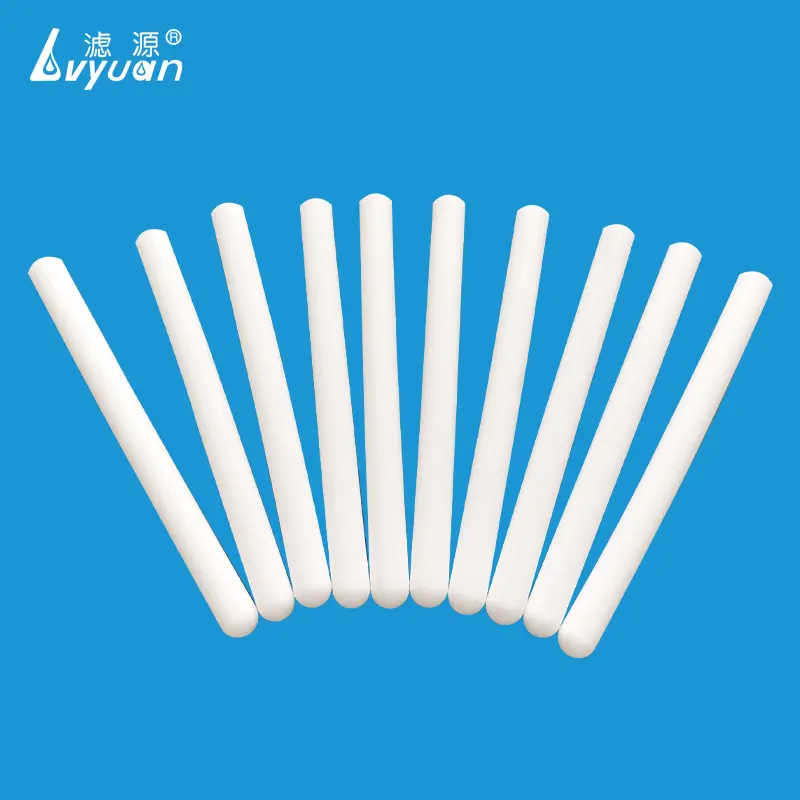
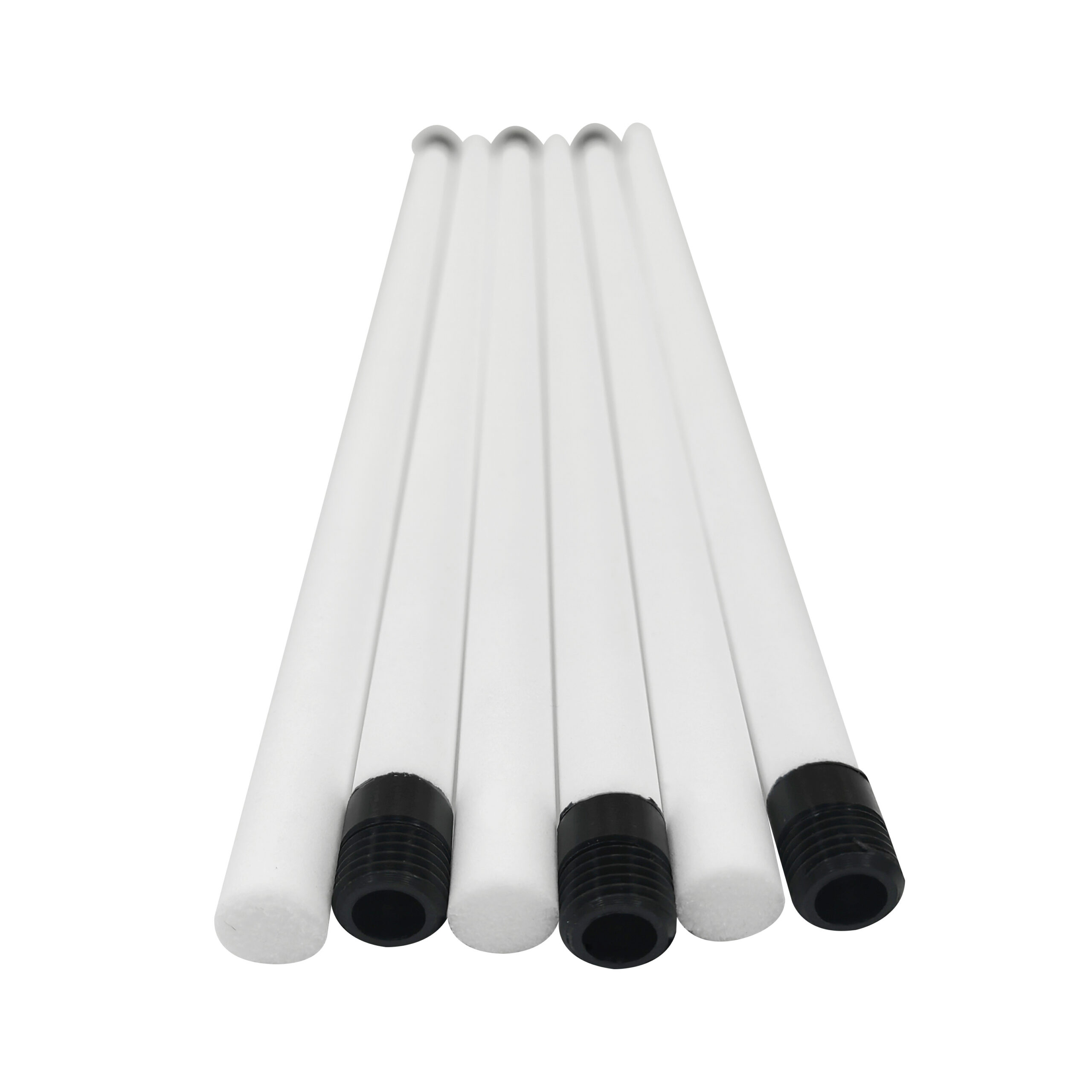
Key Takeaways
- “Max temp” and “max pressure” are marketing numbers unless you derate for time, creep, chemistry, and pressure spikes.
- If you remember only one rule: pressure capability drops fast as temperature rises—especially for PE/PP/PA.
- PTFE is the high-temperature, harsh-chemistry champ… but it’s not automatically the strongest at room temp unless the geometry supports it.
- PA (nylon) is the most misunderstood: water absorption + hydrolysis risk + chemistry sensitivity can quietly move your “limit” downward.
- In real plants, most failures come from ΔP shock, thermal cycling, and wrong seals—not a steady-state rating.
Direct answer (first 100 words)
For practical design, PE and PP are the go-to materials for moderate temperatures and pressures, PTFE is preferred when heat and aggressive chemistry are non-negotiable, and PA (nylon) sits in the middle but needs careful control of moisture and cleaning chemistry. Typical continuous temperature ranges are roughly PE ~60–80°C, PP ~80–100°C, PA ~90–120°C, and PTFE ~200–260°C depending on grade and construction. Pressure/ΔP limits are not universal: they depend heavily on porosity, wall thickness, cartridge length, support core, and temperature derating, so you design by margins, not bravado.
Introduction: If you ask “What’s the max?” you’re already halfway to failure
I know the email. You know the email.
“Hi, what is the maximum temperature and pressure for your PE/PP/PTFE/PA cartridges?”
It’s an innocent question. It’s also the wrong one—because a cartridge doesn’t fail at a single magic number like a cartoon anvil.
It fails because of creep. Or thermal cycling. Or ΔP spikes during startup. Or a cleaning chemical that slowly turns “compatible” into “brittle.” Or a gasket that taps out before the media does and you blame the cartridge anyway.
So here’s how I actually design and specify these materials when the goal is: no surprises.
Outline (so we stay practical)
- What “temperature limit” and “pressure limit” really mean
- A material-by-material cheat sheet: PE vs PP vs PTFE vs PA
- The big derating forces: temperature, time, chemistry, cycling, ΔP shock
- A simple spec checklist you can paste into an RFQ
- FAQ (schema-friendly)
H2: Two limits you must separate: operating pressure vs differential pressure (ΔP)
This is where people get tricked.
H3: Operating pressure ≠ filter stress
A cartridge can live inside a housing at 10 bar and feel perfectly relaxed… if the pressure is balanced.
What actually loads the media is differential pressure (ΔP)—the pressure drop across the cartridge wall. ΔP is what causes:
- compaction (especially in polymeric porous media)
- deformation and creep over time
- collapse or cracking if something goes wrong fast
H3: Pressure spikes are the “hidden spec”
Steady-state ΔP might be 0.2 bar. Then someone opens a valve too fast, a pump ramps hard, or a slug of solids hits, and you see 1–3 bar in a blink.
That blink is what kills cartridges.
H2: Material cheat sheet — what each polymer is good at (and what it hates)
Below are practical ranges I use as a starting point. Real ratings depend on grade, pore structure, geometry, and hardware.
H3: PE (Polyethylene) — the steady, affordable workhorse
Where PE shines
- Moderate-temperature liquid filtration
- Many water-based and mild chemical streams
- Good toughness at room temperature
Where PE gets nervous
- Higher temperatures (softening + creep)
- Some hydrocarbons/solvents depending on grade and exposure
Rule-of-thumb temperature
- Continuous: ~60–80°C (varies by grade and mechanical design)
Design note
- If you’re near the upper temperature range, assume pressure capability will derate sharply. PE will “relax” under load (creep). That’s not a defect. It’s polymer physics.
H3: PP (Polypropylene) — higher temp than PE, common in process filtration
Where PP shines
- Hotter water/aqueous process streams than PE can comfortably handle
- Broad industrial compatibility in many systems
- Often a great cost/performance middle ground
Where PP gets nervous
- Strong oxidizers and certain aggressive chemistries at elevated temp
- Repeated thermal cycling if the design is thin or unsupported
Rule-of-thumb temperature
- Continuous: ~80–100°C (sometimes higher in well-supported designs)
Design note
- PP is often the best “default” for sintered cartridges when you’re not dealing with savage solvents or SIP-level heat.
H3: PA (Polyamide / Nylon) — strong, but moisture changes the game
Where PA shines
- Mechanical strength and abrasion resistance
- Some higher-temp duties than PE/PP when chemistry is friendly
- Good in certain solvent and oil environments (case-dependent)
Where PA gets tricky
- Absorbs water → dimensional changes and property shifts
- Hydrolysis risk at elevated temperature (especially hot water/steam environments)
- Can be sensitive to strong acids/alkalis/oxidizers
Rule-of-thumb temperature
- Continuous: ~90–120°C (but derate fast in hot aqueous/harsh cleaning service)
Design note
- Nylon is the “it depends” material. If your system is wet, hot, and chemically aggressive, nylon can age faster than you expect.
H3: PTFE (Polytetrafluoroethylene) — harsh chemistry + high heat champion
Where PTFE shines
- Aggressive solvents, acids, corrosives (broad resistance)
- High temperatures
- Hydrophobic behavior is useful in gas/vent filtration
Where PTFE surprises people
- PTFE is chemically stubborn, but mechanical design still matters. Porous PTFE can be less rigid than you assume if unsupported.
- Seals and hardware often fail first.
Rule-of-thumb temperature
- Continuous: ~200–260°C depending on construction
- (And yes, PTFE can handle more in theory—but real cartridges include other components.)
Design note
- If your process scares PP, PTFE is where you go to sleep better.
H2: The derating forces that actually decide your “limits”
Here’s what silently moves your safe operating envelope.
H3: Temperature + time = creep (the slow-motion failure)
Polymers under load deform over time. The hotter it is, the faster it happens.
Practical takeaway:
- At elevated temperature, your “safe ΔP” should be dramatically lower than at room temperature.
- Design with margin. Then add more margin.
H3: Chemistry changes everything (compatibility is not binary)
Chemical compatibility isn’t “yes/no.” It’s “yes, until the temperature rises,” or “yes, until you leave it soaking for 48 hours,” or “yes, unless you use that oxidizing cleaner.”
Practical takeaway:
- Always consider cleaning chemicals (CIP) in the material selection, not just process fluid.
H3: Thermal cycling (expansion, contraction, micro-damage)
Even if you’re under max temperature, repeated cycles can cause:
- loosening interfaces
- fatigue in thin sections
- seal compression set and bypass
Practical takeaway:
- If you have frequent hot/cold transitions, don’t spec right at the edge.
H3: Pressure/flow transients (startup is where filters go to die)
You can run “within spec” for months and still kill cartridges with one brutal startup.
Practical takeaway:
- Use soft starts, valve ramping, and ΔP monitoring.
- Design the filter stage for worst-case transient, not average day.
H2: My practical design guidelines (the ones that prevent 2 a.m. phone calls)
H3: 1) Specify by ΔP at temperature, not “system pressure”
Ask suppliers for:
- maximum recommended differential pressure at your operating temperature
- whether it’s instantaneous or continuous rating
- any derating guidance or test method
H3: 2) Control flux (flow per area)
High flux makes everything worse:
- faster fouling
- higher ΔP
- more compaction
- more chance of collapse during upset
If cartridges “fail randomly,” sizing is usually the villain.
H3: 3) Don’t let seals sabotage you
Media survives. Gasket fails. Bypass happens. Then everyone blames the cartridge.
When you specify limits, specify the whole assembly:
- media
- end caps / core (if present)
- gasket/elastomer
- housing geometry
H3: 4) Treat cleaning as part of the duty cycle
If you backwash, chemically clean, or ultrasonically clean, that’s not “maintenance.” That’s a load case.
Track:
- number of cycles
- performance recovery
- dimensional changes
- crack/deformation inspection
H2: Copy/paste RFQ spec checklist (use this and look terrifyingly competent)
- Material: PE / PP / PTFE / PA (grade if known)
- Pore rating: nominal/absolute definition
- Operating temperature: normal + max + cycling profile
- Process fluid + cleaning chemicals (CIP) + exposure time
- Flow rate and viscosity range
- Target ΔP (clean) and maximum allowable ΔP (dirty)
- Expected solids loading / particle type
- Cartridge geometry: OD/ID/length, support requirements
- Maximum recommended ΔP at temperature (continuous and transient)
- Seal material requirements + temperature/chem compatibility
- Acceptance tests: ΔP/flow, dimensional tolerance, visual criteria
FAQ (People Also Ask)
What is the maximum temperature for PE, PP, PTFE, and PA filters?
As a practical starting point: PE ~60–80°C, PP ~80–100°C, PA ~90–120°C, PTFE ~200–260°C, depending on grade and construction. Real limits must include derating for time, chemistry, and cycling.
Why do pressure ratings drop as temperature increases?
Polymers soften and creep more at higher temperatures. Under differential pressure, the porous structure can compact or deform faster, so the safe ΔP limit decreases.
Is PTFE always the best choice?
Not always. PTFE is often best for harsh chemicals and high temperatures, but cost, mechanical support, and seal compatibility still matter. In moderate service, PP can be the smarter, simpler choice.
Can nylon (PA) be used in hot water or steam?
It can, but it requires caution. PA absorbs water and can hydrolyze at elevated temperatures depending on conditions and chemistry. If the system is hot, wet, and aggressive, you may need PP or PTFE instead.
Should I design based on operating pressure or differential pressure?
Design based on differential pressure (ΔP) across the cartridge, especially at operating temperature and during transients. That’s the stress that drives collapse and deformation.
The Bottom Line
If you want the safest, most boring filtration life possible: stop chasing a single “max temp” and “max pressure” number like it’s a cheat code.
Design around ΔP at temperature, account for creep, respect chemistry, and assume startup spikes are real. Choose PE for mild/moderate duty, PP for the reliable middle, PTFE when the process turns vicious, and PA only when you understand its moisture-and-chemistry personality.
If you want, tell me your target temperature, ΔP, fluid, and whether this is gas or liquid—and I’ll suggest the most conservative material pick plus two “gotchas” to watch for in the field.